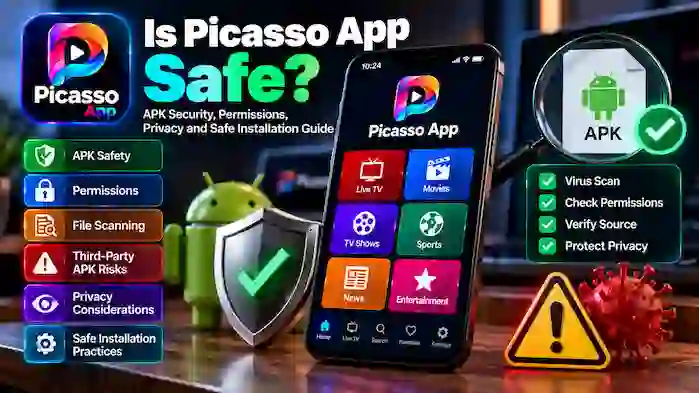
Is Picasso App safe? This is an important question for Android users researching the application before downloading or installing it.
When installing an APK from a third-party source, users should consider several factors, including file authenticity, application permissions, potential security risks, and privacy practices.
An APK may install successfully without necessarily being safe or trustworthy. Therefore, checking its source and understanding its requested permissions are important steps before installation.
In this guide, we explain Picasso App safety considerations, APK security, file scanning, third-party download risks, privacy concerns, and safer installation practices.
Is Picasso App Safe to Use?
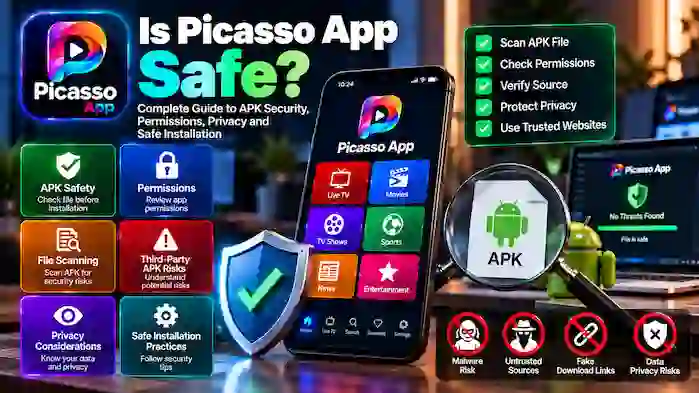
The safety of Picasso App cannot be confirmed universally without verifying the exact application version, installation file, publisher, and distribution source.
Different APK files may use the same application name while coming from different publishers or websites.
Before installing Picasso App, consider:
- Whether the source is authentic.
- Whether the publisher is identifiable.
- Whether the APK has been modified.
- Which permissions the application requests.
- Whether security tools identify potential threats.
- How the application handles personal information.
A positive result from one security check does not guarantee complete safety.
Is Picasso APK Safe to Download?
Downloading an APK from an unfamiliar website can introduce security and privacy risks.
Some third-party files may be outdated, modified, incomplete, or distributed without clear information about their origin.
Common APK Download Risks
Modified Installation Files: An APK may contain changes that are not disclosed by the distributor.
Unwanted Software: Some files may include components that behave differently from the advertised application.
Fake Download Buttons: Misleading website elements may direct users to unrelated downloads.
Outdated Versions: Older releases may contain unresolved security weaknesses.
Unclear Publisher Information: Users may have difficulty determining who created or maintains the package.
For these reasons, verify the application source before downloading.
Picasso App Permissions
Application permissions determine which device features or information an app can access.
Reviewing permissions is an important part of Android security.
Common Android Permissions
| Permission | General Purpose | What to Consider |
| Internet | Online connectivity | Expected for online services |
| Notifications | Alerts and updates | Review notification preferences |
| Storage or media access | Access to selected files | Check whether access is necessary |
| Camera | Camera functionality | Verify the stated purpose |
| Microphone | Audio recording or input | Review why access is requested |
| Location | Location-related features | Consider whether it is necessary |
These are general Android permissions, not a verified list of Picasso App permissions.
How to Review Picasso App Permissions
On most Android devices:
- Open Settings.
- Select Apps or Applications.
- Find Picasso App.
- Open Permissions.
- Review the permissions shown.
- Remove unnecessary permissions where Android allows it.
Menu names may vary by device manufacturer and Android version.
Why Excessive Permissions Matter
Permissions that do not match an application’s stated functionality deserve additional attention.
For example, an entertainment application should provide a clear reason for requesting access to sensitive device features.
If the purpose is unclear, avoid granting the permission until you can verify its necessity.
How to Scan Picasso APK for Security Risks
Scanning an APK can help identify known threats before installation.
However, automated scanning has limitations and should be combined with source verification.
Basic APK Security Checks
Check the File Source: Confirm where the APK originated and whether the publisher is identifiable.
Review the Package Information: Check the application name, version, and package details.
Use a Reputable Security Scanner: A recognized antivirus or file-analysis service may help identify suspicious files.
Review Security Alerts: Do not ignore warnings simply because the application is popular or familiar.
Avoid Unnecessary Installation: If the file cannot be verified, do not proceed.
Can an Antivirus Guarantee APK Safety?
No. Security scanners can detect known threats and suspicious characteristics, but they cannot guarantee that every file is harmless.
A file receiving no detection does not establish that it is authentic, privacy-friendly, or properly licensed.
Third-Party Picasso APK Risks
Third-party APK distribution introduces additional uncertainty because the original publisher may not control every copy.
Potential Risks
- Modified application code
- Unwanted background activity
- Exposure of personal information
- Misleading application descriptions
- Fake update notifications
- Unnecessary permissions
- Unverified content sources
Why Modified APKs Need Extra Attention
Modified APKs may change the application’s original behavior.
Users may not know which components were altered or whether the modifications introduce security problems.
Avoid installing modified files when their source and integrity cannot be independently verified.
Picasso App Privacy Considerations
Privacy refers to how an application collects, uses, stores, and shares information.
Before using Picasso App, look for a clear privacy policy and information about its publisher.
Information to Review
Data Collection: Determine what information the application says it collects.
Data Sharing: Check whether information may be shared with third parties.
Device Permissions: Review access to files, media, location, and other sensitive features.
Account Information: Avoid entering sensitive details into services whose identity cannot be verified.
Data Deletion: Check whether the publisher explains how users can request deletion of their information.
Do not assume that an application collects no information simply because it does not require account registration.
Safe Picasso App Installation Practices
Following basic security practices can reduce unnecessary risks when installing Android applications.
Verify the Application Source
Prefer the developer’s official website or a recognized application distribution platform.
Check the publisher identity and application details.
Check the APK Version
Confirm that the version information is consistent with the publisher’s release information.
Avoid files with unclear version histories.
Review Android Security Warnings
Android may display warnings about applications installed outside recognized distribution channels.
Read these messages carefully rather than automatically dismissing them.
Check Application Permissions
Grant only permissions that are necessary and clearly explained.
Keep Android Updated
Install available Android security updates to help protect the device against known vulnerabilities.
Avoid Suspicious Links
Do not open unexpected download links, fake update prompts, or websites requesting unrelated personal information.
Picasso App Safety on Android
Android includes security and permission controls that help users manage installed applications.
For safer usage:
- Keep Google Play Protect enabled where available.
- Review installed application permissions.
- Remove applications you no longer use.
- Keep the operating system updated.
- Avoid unknown installation packages.
- Monitor unexpected device behavior.
Security features can reduce risks but cannot eliminate every threat.
Is Picasso App Safe for Android TV and PC?
Safety considerations also apply when using Android applications on televisions or computers.
Android TV
Before installing an APK on Android TV, verify the source, compatibility, and requested permissions.
A mobile application may not be designed for television navigation or display.
PC and Android Emulators
When using an Android emulator, consider both the emulator’s security and the APK’s authenticity.
Download emulator software from its official source and avoid importing unidentified installation files.
Warning Signs of an Unsafe APK
Pay attention to the following indicators:
| Warning Sign | Why It Matters |
| Unknown publisher | Application identity is unclear |
| Excessive permissions | Access may exceed stated functionality |
| Unexpected security alerts | Potential threat requires investigation |
| Misleading download links | May lead to unrelated files |
| No clear privacy information | Data practices are uncertain |
| Unexplained modifications | File integrity cannot be established |
| Fake update messages | May direct users to unsafe downloads |
One warning sign does not automatically prove malicious behavior, but it should prompt further verification.
What to Do If You Suspect an APK Is Unsafe
If an installed application raises security concerns, take these general precautions:
- Stop using the application.
- Review Android security alerts.
- Run a scan using a reputable security tool.
- Review and revoke unnecessary permissions.
- Uninstall the application if its source cannot be trusted.
- Update Android and relevant security software.
- Change affected account passwords from a trusted device if you believe credentials may have been exposed.
If sensitive information may have been compromised, seek help from a trusted adult or qualified technical support professional.
Picasso App Safety Checklist
Before installing any Picasso APK, review the following checklist:
- Publisher and source are identifiable.
- APK version information is available.
- File integrity has been checked.
- Security warnings have been reviewed.
- Requested permissions are understandable.
- Privacy information is available.
- Android security protections are enabled.
- Content sources are appropriately authorized.
If important information is missing, avoid proceeding until it can be verified.
Frequently Asked Questions
Is Picasso App safe to use?
Its safety depends on the exact application version, source, file integrity, permissions, and privacy practices. A universal safety guarantee cannot be made without verification.
Is Picasso APK safe to download from third-party websites?
Third-party downloads can introduce risks involving modified files, unwanted software, and unclear publishers. Verify the source before downloading.
Can Picasso APK contain malware?
An APK distributed under the Picasso name could potentially be modified or contain unwanted components. Its security should be assessed individually.
How can I check whether Picasso APK is safe?
Verify its source, review package details, scan the file using a reputable security tool, and examine Android permission requests.
Does Picasso App require sensitive permissions?
The actual permissions depend on the specific version. Review the permission list in Android settings rather than relying on assumptions.
Is Picasso App safe for personal information?
Privacy depends on the application’s actual data collection and sharing practices. Avoid providing sensitive information when the publisher or privacy policy cannot be verified.
Is a virus-free APK always safe?
No. A clean scan does not guarantee authenticity, privacy protection, or the absence of unknown security issues.
Is Picasso App safe on Android TV?
The same source, permission, and file verification principles apply. Compatibility and security should be checked before installation.
Should I install a modified Picasso APK?
Modified APKs introduce additional uncertainty because their changes and integrity may not be independently verified.
Final Thoughts
Is Picasso App safe? The answer depends on the specific APK, its distribution source, security characteristics, permissions, and privacy practices.
Before installing Picasso App, verify its publisher, review the file with reputable security tools, and understand the permissions it requests.
Using trusted distribution sources, keeping Android updated, and avoiding suspicious modified packages are important practices for reducing application security risks.